Sorrento
4 min read
Sorrento
4 min read
Sedil Dominova is one of the many tourist attractions of Sorrento and a symbol of the history of the locals. A must for tourists!
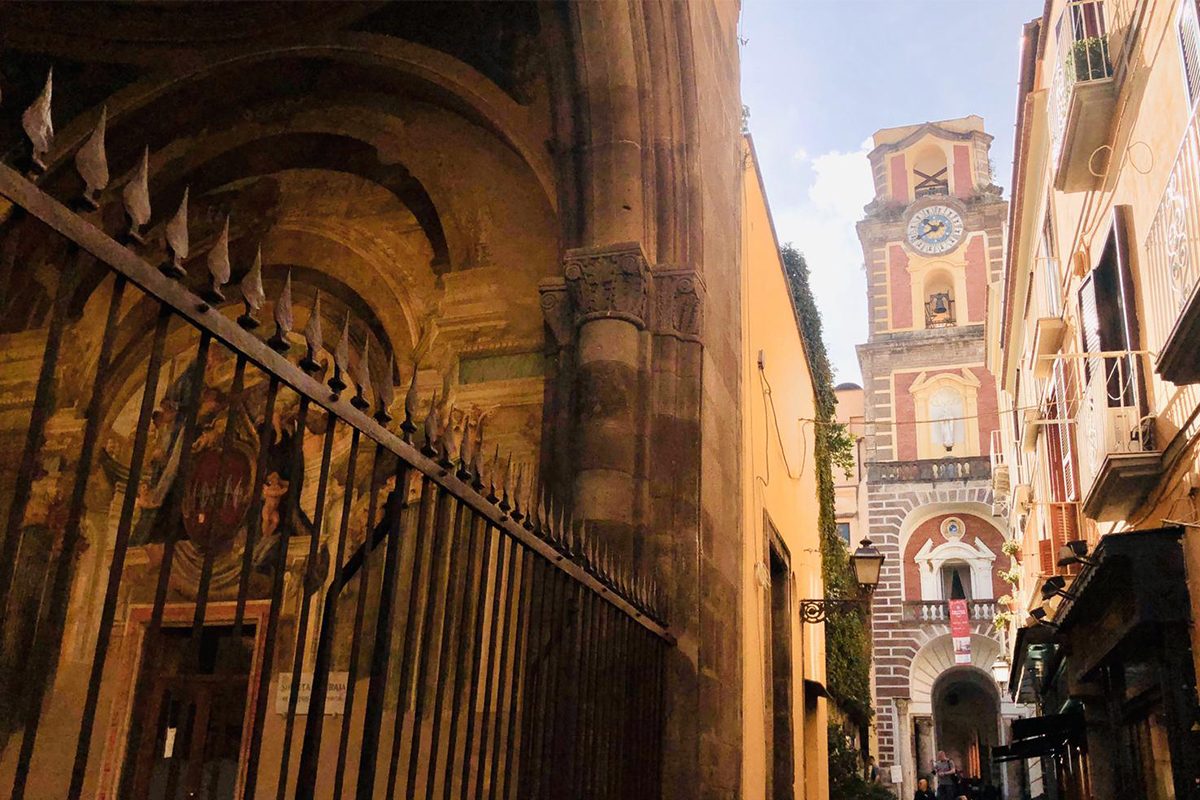
It is located in the city centre, Via Cesareo, one of the parallels of the main street, Corso Italia, and looks out into Largo so-called “schizzariello” (in English splash) because of the presence of a fountain.
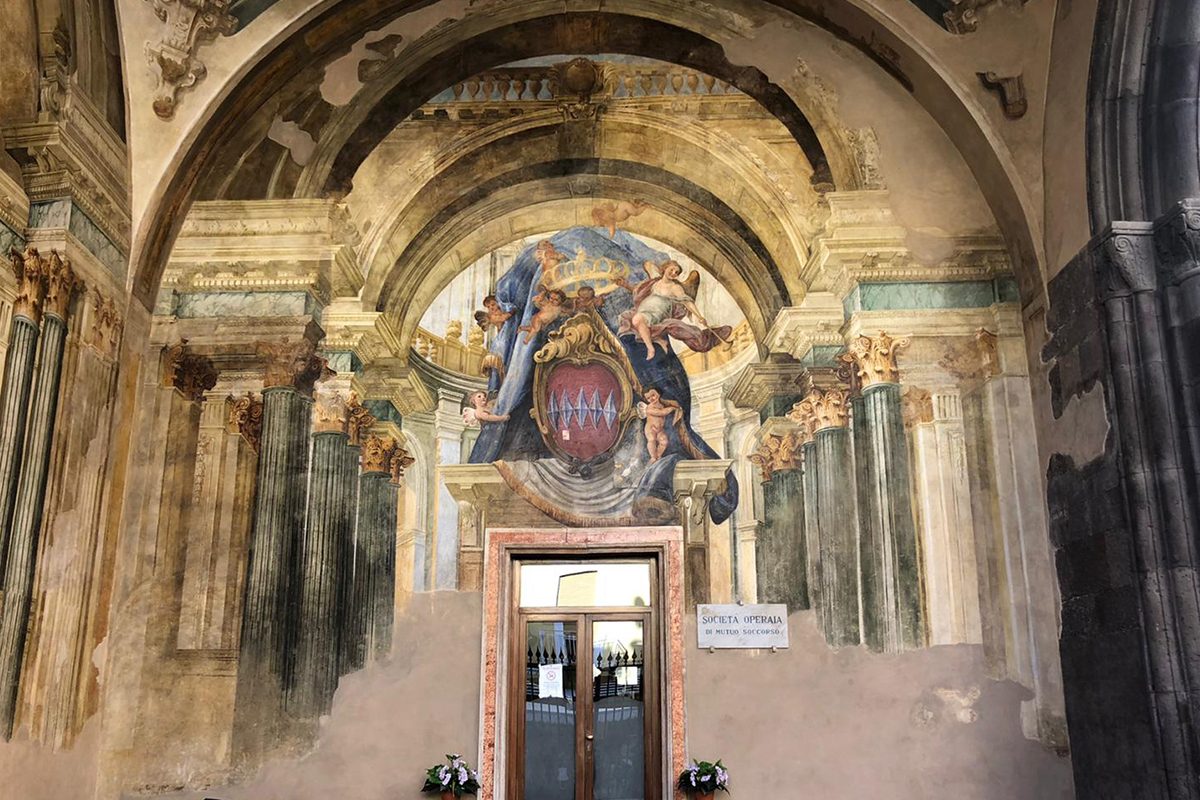
Sedil Dominova was the seat of part of the Sorrento aristocracy (specifically, the patrician families Vulcano, Mastrogiudice, Sersale, Capace, Nobilione, Molisano, Donnorso, Boccia, Orefice, Marziale, Cortese, Teodoro, Carlino, Spasiano), but since 1877 the building hosts an association created to guarantee first forms of mutualism for workers. On the palace’s front, there is in fact a plaque: “Società Operaia di Mutuo Soccorso”, the Workers’ Mutual Aid Society.
Sedil Dominova changed very little over time. It still maintains its fifteenth-century structure.
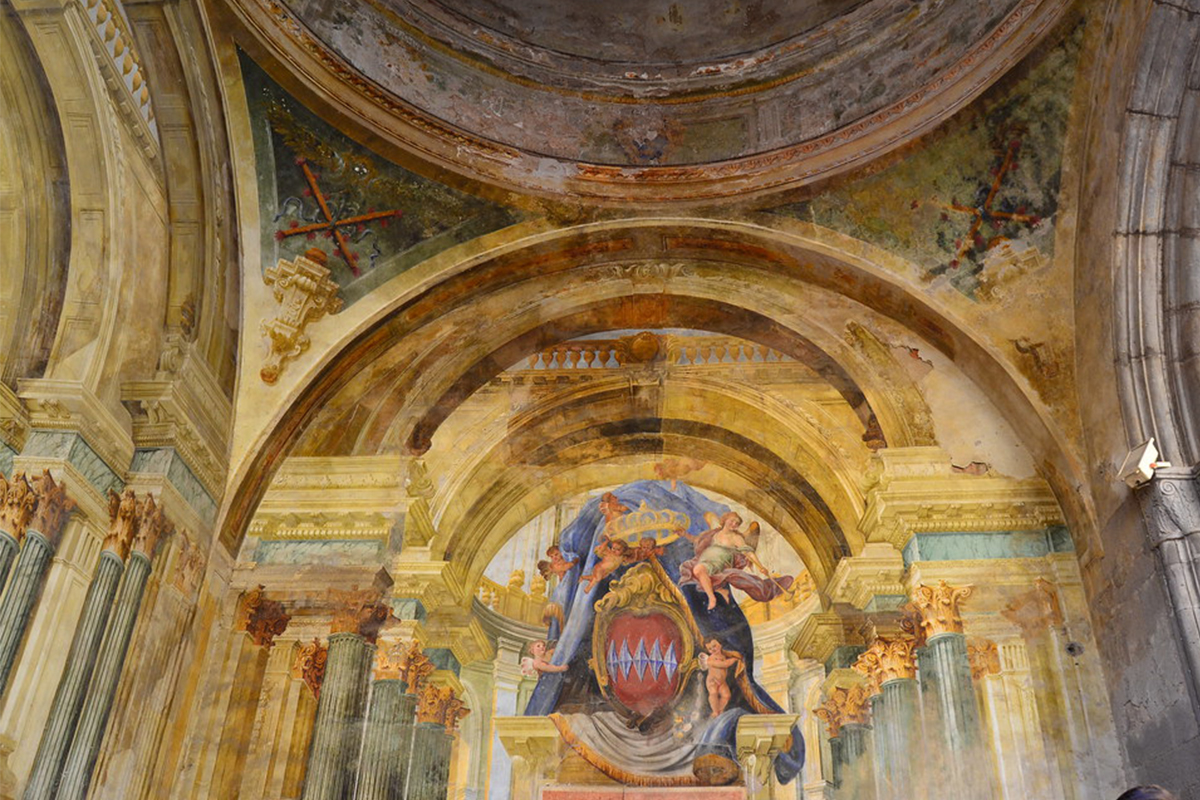
The building has two sides open to the outside through large round arches in piperno and archaic capitals. The dome, built afterwards, is covered with the “riggiole”, a typical majolica tile. The artist Rigiolario Chiajese from Naples carried out the work in the 18th century. The external walls and the allegorical statues, such as angels, cherubs and crowns, are frescoed with motifs from the school of the Sorrento painter Carlo Amalfi. All the paintings date back to the eighteenth century.
On the top of the external corner, there is another distinctive element: the famous “lozenges” of Sorrento, representing the coat of arms of the city, and the Angevin lilies, representing the house of France.
In the entire region, Sedil Dominova is the last visible testimony of the typical “Palazzo del Sedile”, ancient location for the Council of the Aristocracy and heart of the administrative city’s life.
Since 1877, it has been the headquarters of the Workers’ Mutual Aid Society of Sorrento, a trade union. Until the post-WWII, among the association’s members, there were many inlay artisan, workers in the sector of the orange and lemon cultivation, sailors and tourism’s workers. This tells us a lot about the working class in Sorrento at the end of the 1800s and makes us understand which kind of job was most popular at the time.
Here, between the late 1800s and the early 1900s, fundamental choices were made for the future of the whole Sorrento working classes.
Moreover, in the same period, the American politician and layer William Waldorf Astor attended the place and donated 25 thousand francs during his long stay at the Amalfi Coast. There is a plaque located in the internal hall of the building that certifies the generous gesture. Written in Latin by the scholar Enrico Cocchia, the plaque says, “Commendator William Waldorf Astor, our worthy partner, donated the large sum of 25,000 francs to the old Treasury of this workers’ association. For such munificent offer, the Society of Workers affixes a plate for his perpetual memory, remembering with it the date of the great gift received on April 27, 1909, for which this fellowship has made a fifty years step forward”. The plaque remains and the Astor donation is one of the most recurring events in the Sorrento fellow’s tales.
Before the WWI, the association went through a crisis. That was not the last difficult moment it had to face. Great Depression, unemployment and the bankruptcy of Banca Astarita were obstacles too. In the end, the Workers’ Mutual Aid Society of Sorrento increasingly felt the pressure of the fascist regime, until a verbal eviction notice, luckily avoided in 1938.
Until the ‘60s, The Workers’ Mutual Aid Society of Sorrento was able to keep his historical role and maintained his mutualistic purposes with the provision of subsidies and pensions.
Sedil Dominova is in Sorrento, Via Cesareo.
Free entry
Il Sedil Dominova è una delle numerose attrazioni turistiche di Sorrento e il simbolo della storia del popolo sorrentino. Da visitare assolutamente!
Si trova nel cuore della città, in Via Cesareo, in una delle parallele di Corso Italia e si affaccia su Largo detto “schizzariello“, con riferimento ad una fontana dalla quale “schizzava” continuamente acqua.
La Sedil Dominova fu sede di una parte della nobiltà sorrentina (nello specifico, le famiglie patrizie Vulcano, Mastrogiudice, Sersale, Capace, Nobilione, Molisano, Donnorso, Boccia, Orefice, Marziale, Cortese, Teodoro, Carlino, Spasiano), ma dal 1877 il palazzo ospita un’associazione nata per garantire ai lavoratori le prime forme di mutualismo. Infatti sulla parte frontale è possibile vedere la targa “Società Operaia di Mutuo Soccorso”.
Il Sedil Dominova è rimasto sostanzialmente inalterato nella sua struttura quattrocentesca.
Sono presenti due lati, aperti all’esterno da grandi arcate a tutto sesto in piperno, i capitelli arcaicizzanti. La cupola, rivestita con tipiche “riggiole” maiolicate, è di epoca successiva: un’opera eseguita nel XVIII secolo dal “Rigiolaro Chiajese della città di Napoli”.
Le pareti della parte esterna e le architteture simboliche, come angeli, puttini e corone, sono affrescate con motivi che s’avvicinano alla scuola del pittore sorrentino Carlo Amalfi.
Elemento distintivo è lo stemma della città di Sorrento “le losanghe”, che è posizionato nello spigolo esterno in alto, insieme ad un altro stemma, che rappresenta i gigli angioini di Francia. Tutti gli affreschi risalgono al Settecento.
Il Sedil Dominova è l’unica testimonianza rimasta in tutta la Regione degli antichi sedili nobiliari.
Dal 1877 ad oggi diventa la sede del sodalizio operaio. Tra gli iscritti, fino al secondo dopoguerra, ci sono numerosi artigiani e operai dell’intarsio, insieme ad esponenti del settore della coltivazione di arance e limoni e delle attività marinaresche e turistiche. Questo ci aiuta a capire quali fossero i lavori più diffusi a Sorrento alla fine dell’800.
Il Sedil Dominova è stato tra la fine dell’800 e l’inizio del ‘900 il posto in cui sono state prese scelte fondamentali per il futuro delle classi lavoratrici di tutta la cittadina.
Inoltre nello stesso periodo fu frequentato anche dal politico e avvocato statunitense William Waldorf Astor, che durante la sua lunga permanenza in Costiera, donò 25mila Franchi.
Lo attesta anche una lapide situata nella sala interna. La lapide, scritta in latina dallo studioso Enrico Cocchia, dice:
“Il Commendator William Waldorf Astor, nostro socio benemerito, donò a favore della Cassa vecchia di questo sodalizio operaio la cospicua somma di Franchi 25mila. Per tanta munificentissima offerta la Società Operaia a perenne memoria vi appone una lapide, ricordando con essa la data del gran dono ricevuto il 27 aprile 1909, per cui questo sodalizio ha compiuto un passo avanti di cinquant’anni”.
La lapide è ancora presente e la donazione di Astor è uno degli eventi più ricorrenti nei racconti dei soci e di tutti i sorrentini.
L’ente mutualistico ebbe una situazione di crisi, nel periodo che precedette l’inizio della Prima Guerra Mondiale. Inoltre, dovette affrontare in seguito momenti ancora più difficoltosi a causa della Grande Crisi, della disoccupazione e del fallimento della Banca Astarita.
Infine, la Società Operaia di Mutuo Soccorso sentì sempre di più la pressione del regime fascista, fino ad arrivare all’intimazione verbale di sfratto dal Sedil Dominova, fortunatamente evitata nel 1938.
La Società Operaia di Mutuo Soccorso di Sorrento, fino agli anni ’60, è stata in grado di realizzare gli scopi mutualistici e l’erogazione di sussidi e pensioni, per i quali fu fondata nel 1877.
Il Sedil Dominova si trova in Via Cesareo a Sorrento.
Ingresso gratuito.
Newsletter
Get the events calendar and local guides every month
No spam, only useful content. You can unsubscribe at any time.
We use cookies to improve your experience and analyse traffic. You can accept, reject or choose your preferences. Cookie Policy
Cookies required for the site to work. Always active.
Statistical cookies (Google Analytics/GTM) to understand how the site is used.